What to expect during a roof replacement in Ontario, step by step
By Marcus Ramos · Updated 2026-07-24
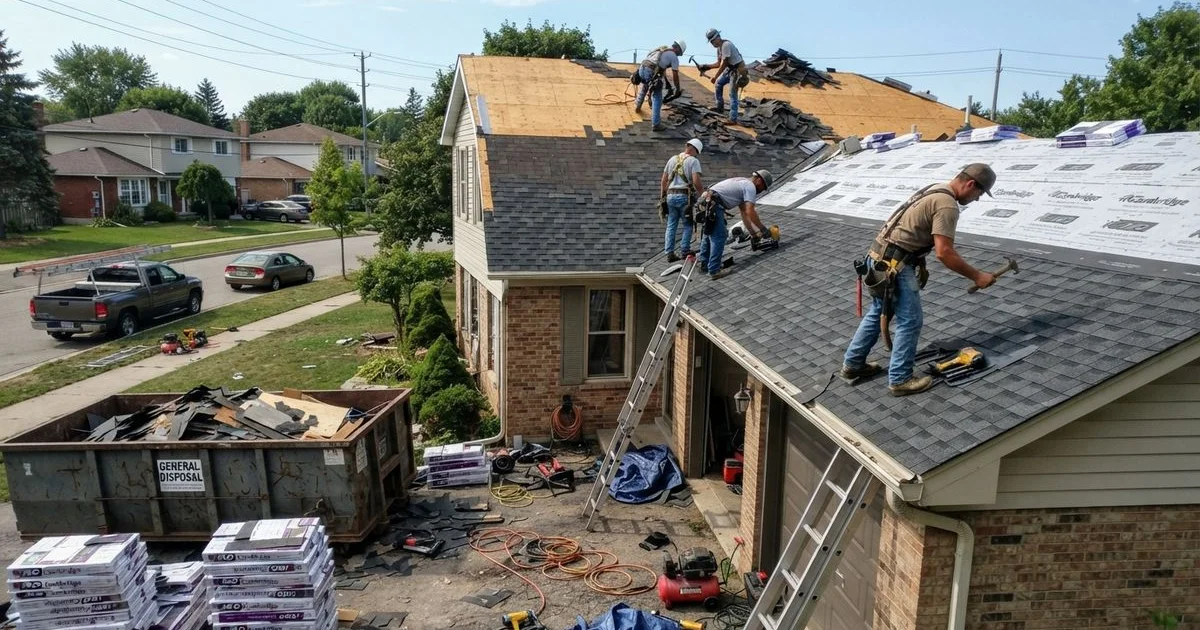
A roof replacement can feel like a black box if you have never been through one. Knowing the sequence in advance makes it easier to ask the right questions and spot a crew that is cutting corners.
Before the crew arrives
The process starts well before anyone climbs a ladder. A contractor should do an on-site inspection, measure the roof, confirm the material and any add-ons like ventilation upgrades, and give you a written quote. If you have not settled on a material yet, our comparison of metal roofing vs. asphalt shingles covers the tradeoffs before the crew arrives. If a permit is required for your project, this is also when it gets pulled, since Ontario municipalities generally require one for a full re-roof depending on scope. A reliable contractor also confirms a rough start date and gives you a heads-up on delivery of materials, which usually shows up on a pallet on your driveway a day or two ahead.
Setup day
On the first day, the crew protects the property. That means tarping landscaping near the house, laying plywood over delicate surfaces like pool decks or interlock, and setting up a disposal bin or trailer for the old roofing material. A magnetic sweep is typically done at the end of every day, not just the last one, to catch stray nails before they end up in a tire or a bare foot.
Tear-off and decking check
Old shingles come off down to the decking. This is the point where hidden problems, like rot from a long-term leak or inadequate ventilation, become visible. A good crew documents this with photos and flags it to you before proceeding, rather than covering it up. This is also the step tied to one of the more common frustrations homeowners report with roofing projects: a final invoice that is much higher than the original estimate because decking replacement was not priced up front. Asking for a per-sheet decking rate in the original quote avoids that surprise.
Underlayment, flashing, and ventilation
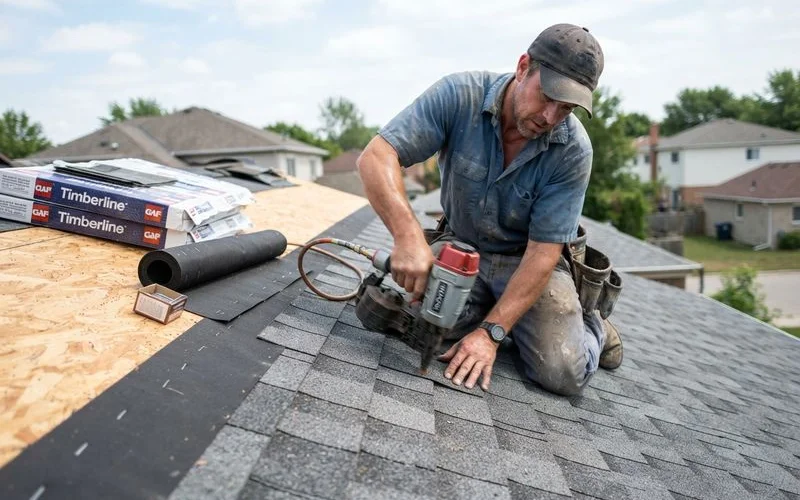
Once the decking is confirmed sound, the crew installs underlayment (and ice and water protection at eaves and valleys, standard practice in Ontario’s climate), replaces flashing around chimneys, vents, and skylights, and addresses ventilation, often by adding or upgrading soffit and ridge venting. This layer matters as much as the shingles themselves for how long the roof lasts.
Shingle installation and finishing
New shingles go on from the eaves up, followed by ridge caps and any final trim. The crew should walk the roof for a quality check, confirm nail patterns meet manufacturer specs (important for keeping the material warranty valid), and photograph the finished roof.
Timeline at a glance
| Stage | Typical duration |
|---|---|
| Inspection and quote | Same day to a few days |
| Permit and material lead time | A few days to a couple of weeks |
| Setup and property protection | 1-2 hours on day one |
| Tear-off and decking check | Half a day to a full day |
| Installation and finishing | 1-2 days |
| Final walkthrough and cleanup | Same day as completion |
Final walkthrough
A final walkthrough with the contractor, ideally in person, is the point to confirm the work matches the quote, ask about warranty documentation (both the manufacturer’s material warranty and the contractor’s workmanship warranty), and get a copy of everything in writing. Warranty paperwork is worth chasing down explicitly, since it is one of the details homeowners most often report having to follow up on after a job wraps.
Weather and scheduling delays
Roofing is weather-dependent work, and rain, high wind, or extreme cold can push a start date or pause a job partway through. A contractor cannot install shingles safely or effectively in wet conditions, since proper adhesion and sealing depend on a dry surface. If your project gets delayed by weather, a reliable contractor communicates the new timeline proactively rather than leaving you to guess, and takes reasonable steps to keep an exposed roof protected if a job has to pause mid-tear-off.
After the crew leaves
Give the new roof a look yourself a few days after completion, once you have had a chance to notice how it performs in normal conditions. Check that gutters are draining properly, that no debris was left behind in less visible areas like flower beds or window wells, and that any add-ons discussed in the quote, like upgraded ventilation, were actually installed as agreed.
You can browse contractors who specialize in this work in our roof replacement and installation category, where listings are ranked using the criteria described in our ranking method. For more on what a project like this costs, start from the Ontario Roofing Directory homepage and compare a few quotes before you commit.
Frequently asked questions
- How long does a roof replacement take?
- Most residential asphalt shingle replacements take one to three days once the crew is on site, weather permitting. Larger, steeper, or multi-material roofs can take longer, and rain delays can push a job back several days.
- Do I need to be home during the replacement?
- Not usually. The crew needs access to the property and a spot to park equipment and a disposal bin, but most homeowners go about their day. Pets are best kept elsewhere given the noise and open work area.
- Will my yard and driveway be damaged?
- A reputable crew protects landscaping, siding, and windows with tarps and plywood before starting, and does a nail sweep with a magnetic roller at the end. Ask what protection measures are included before the job starts.
- What happens if the crew finds rot once the old roof is off?
- This is common enough that it should be addressed in the quote before work starts. Ask in advance what the per-sheet rate is for decking replacement, so a surprise finding does not turn into a surprise bill.