Attic ventilation and insulation: why it matters for your roof and energy bills
By Marcus Ramos · Updated 2026-08-10
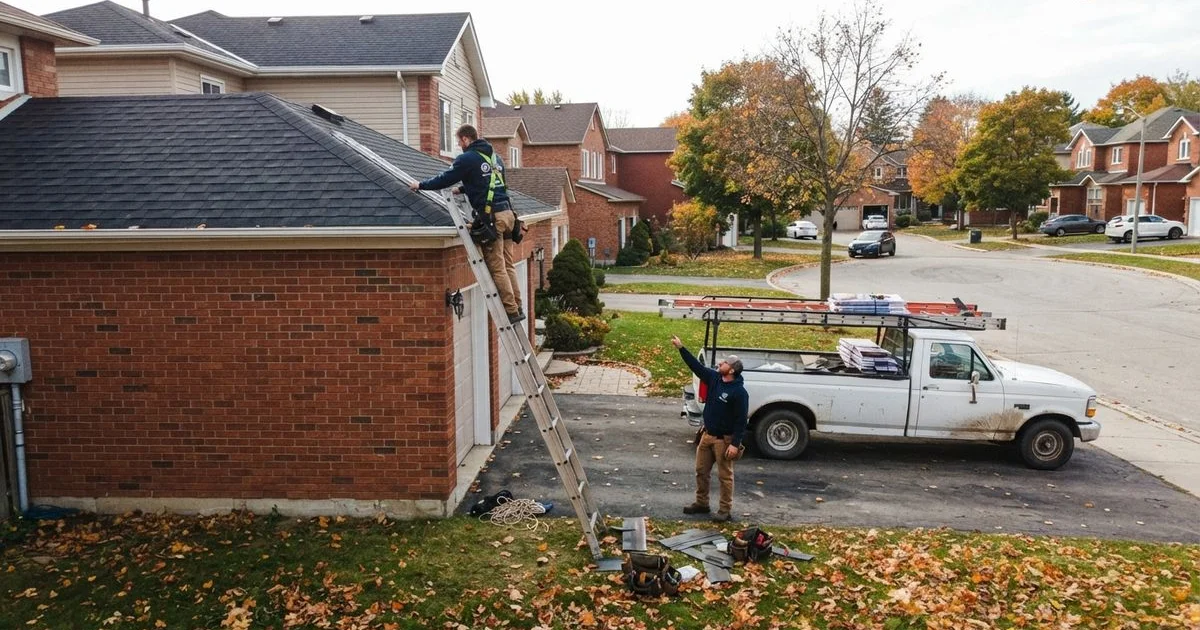
Most homeowners think about their roof as shingles, flashing, and gutters, and rarely think about the attic underneath. In Ontario’s climate, though, what happens in the attic space directly affects how long a roof lasts, how much you spend heating and cooling the home, and how often ice-related problems show up in winter.
What insulation actually does
Attic insulation slows the transfer of heat between the living space below and the attic above. In winter, that means less heat escaping upward and driving up your heating bill. In summer, it means less heat radiating down into upper-floor rooms. Insulation performance is typically described by an R-value, and Ontario’s climate generally calls for a higher R-value than milder regions, since the temperature swing between inside and outside is larger for more of the year.
What ventilation actually does
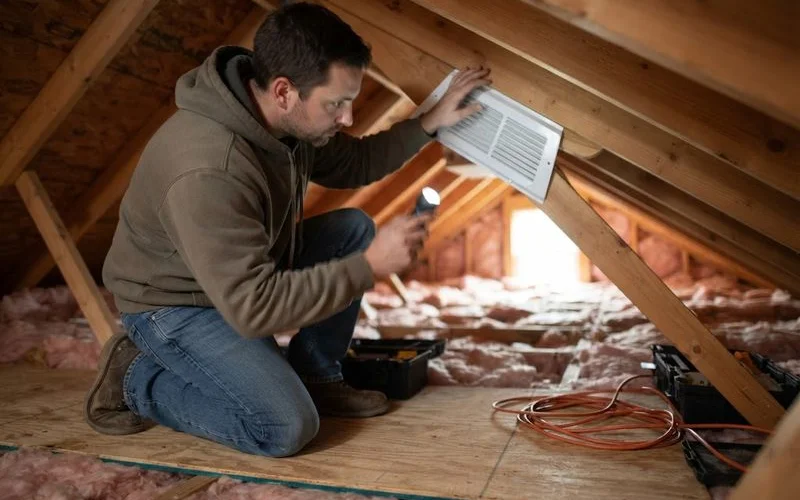
Ventilation is a separate function: moving air through the attic space to carry out moisture and excess heat, typically through a combination of intake vents (usually at the soffit, under the eaves) and exhaust vents (often at the ridge or through gable vents). Without adequate airflow, moisture from everyday household humidity that migrates upward has nowhere to go, and heat can build up in the attic even with good insulation below it.
Why the two need to work together
Insulation and ventilation solve different problems, and one without the other creates issues of its own. Heavy insulation with poor ventilation can trap moisture, leading to condensation, wood rot on the decking, and reduced insulation effectiveness once it gets damp. Good ventilation with inadequate insulation lets too much heat escape from the living space, which drives up energy costs and can contribute to uneven snow melt on the roof surface, a common precursor to ice buildup at the eaves in winter.
Signs something is out of balance
| What you notice | What it may indicate |
|---|---|
| Snow melts unevenly, bare patches near the ridge | Heat escaping through under-insulated areas |
| Frost or condensation visible in the attic | Ventilation not carrying moisture out effectively |
| Recurring ice buildup at the same roof edge each winter | Combination of heat loss and poor airflow |
| High heating bills compared to similar homes | Possible insulation gap |
| Musty smell or visible mold in the attic | Trapped moisture, needs attention |
Why this matters for your roof’s lifespan
Shingles are engineered to handle weather from above, not sustained heat and moisture from below. An attic running consistently warmer and damper than it should degrades roofing materials from underneath over time, in addition to the ice damming risk that comes with uneven heat loss. For the safety side of that ice buildup, see our guide on winter roof and gutter safety. A roof installed on a well-balanced attic system tends to reach its expected lifespan more reliably than one fighting a poorly ventilated or under-insulated attic underneath it.
Getting it assessed
An insulation contractor can measure existing R-values, check ventilation pathways for blockages (insulation stuffed into soffit vents is a surprisingly common issue), and recommend a plan that treats insulation and ventilation as one system rather than two separate fixes. This is often a smaller project than a roof repair or replacement, and it can reduce how often you need either one down the line.
Common mistakes worth avoiding
A frequent issue in older homes is insulation that has settled or shifted over time, leaving gaps that reduce its effective coverage even though the attic still looks well-insulated at a glance. Another common problem is a bathroom or kitchen exhaust fan that vents directly into the attic space instead of outside through the roof or wall, which dumps warm, moist air exactly where you do not want it. Both are easy for an untrained eye to miss but straightforward for a contractor to spot and correct.
Timing the work
Attic insulation and ventilation upgrades can generally be done at any time of year, unlike a roof replacement, which is often weather-dependent. Some homeowners choose to tackle this work in late summer or early fall, ahead of the heating season, so any improvement to energy efficiency and ice dam prevention is in place before winter arrives. If a roof replacement is already planned, addressing ventilation at the same time, while the roof is open, can be more efficient than treating them as two separate projects.
Compare specialists in our insulation contractor category, ranked according to our ranking method. Browse the Ontario Roofing Directory for related roofing and gutter categories if a full inspection turns up other issues.
Frequently asked questions
- How can I tell if my attic insulation is inadequate?
- Uneven snow melt on the roof (bare patches over rooms with less insulation below), noticeably cold rooms on upper floors, or high heating bills relative to similar homes are all common indicators worth investigating further.
- Does more insulation always mean a healthier roof?
- Not on its own. Insulation without matching ventilation can trap moisture in the attic space, which creates its own problems. The two need to work together as a system.
- What is the difference between insulation and ventilation?
- Insulation slows heat transfer from the living space into the attic. Ventilation moves air through the attic space to carry out moisture and excess heat. A roof needs both functioning correctly, not just one.
- Can poor attic ventilation shorten a roof's lifespan?
- Yes. Trapped heat and moisture can degrade shingles from underneath and contribute to ice damming in winter, both of which can shorten how long a roof lasts compared to a properly ventilated one.