Winter roof and gutter safety in Ontario: snow load, ice, and when to call a pro
By Marcus Ramos · Updated 2026-08-05
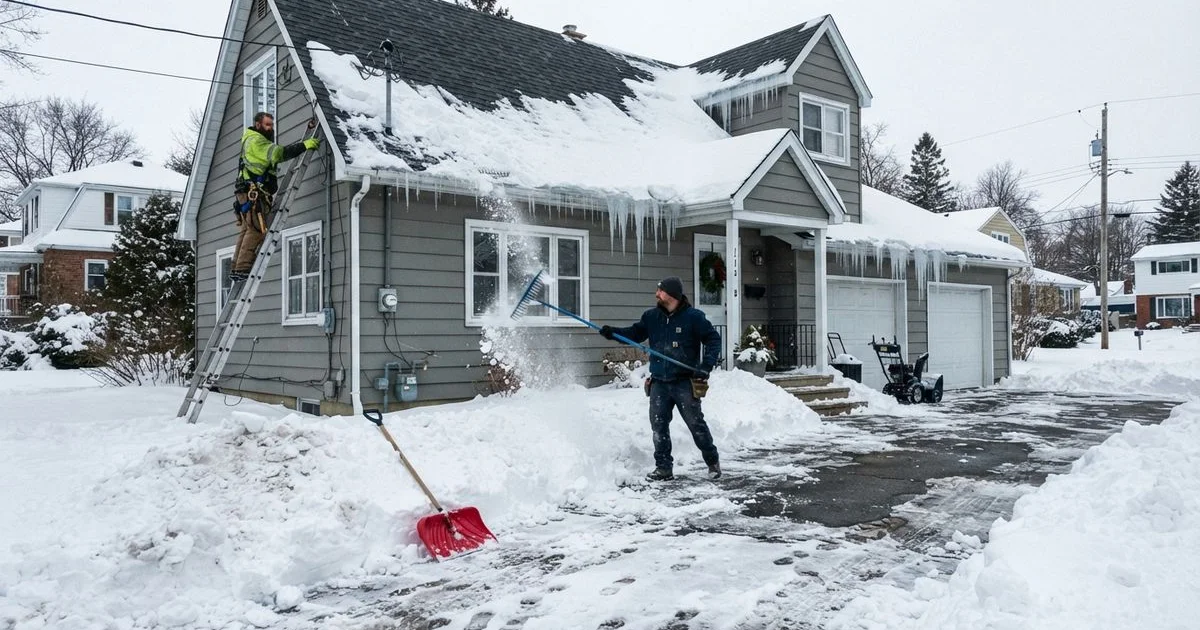
Ontario’s freeze-thaw winters put real stress on roofs and gutter systems, and most of the risk is not obvious from inside a warm house. Knowing what to watch for, and what to leave to a professional, keeps small seasonal issues from turning into safety problems or expensive damage.
This is general safety information, not a substitute for a professional structural or roofing assessment if you have specific concerns about your home.
Snow load on the roof structure
Ontario building codes account for regional snow loads when a roof is engineered, so most homes handle a typical winter without issue. The risk rises with back-to-back storms that pile up heavy, wet snow before anything has a chance to melt or settle. Watch for a roofline that looks noticeably different from neighbouring homes, doors or windows that suddenly stick or will not close properly, or new cracking in ceilings or upper walls. Any of these warrant a call to a professional rather than a wait-and-see approach.
The gutter and eave problem: recurring ice buildup
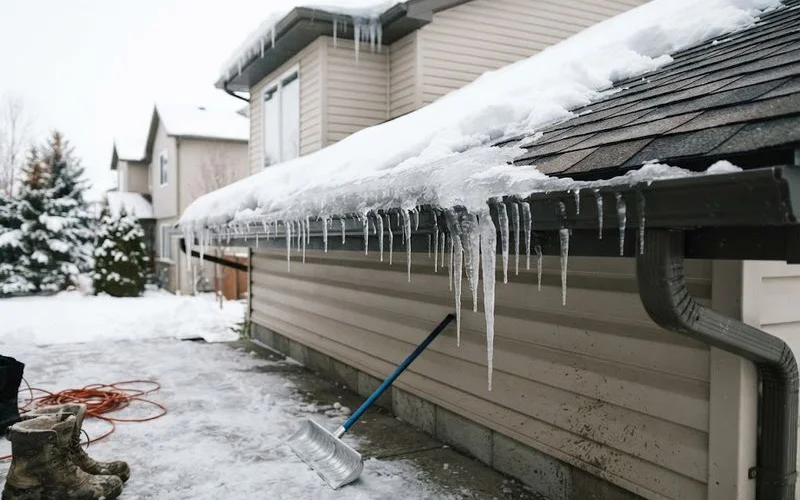
A ridge of ice that forms repeatedly along the same section of roof edge, particularly if it is accompanied by water stains just inside that wall or ceiling, points to heat escaping unevenly from the attic. That escaping heat melts snow higher on the roof, which refreezes at the colder eave and can eventually force water backward under the shingles. This is a pattern worth addressing at the source (attic insulation and ventilation) rather than just clearing ice after the fact each winter. Our guide on attic ventilation and insulation goes deeper into fixing that imbalance at the source.
Why homeowners should stay off the roof
A snow- or ice-covered roof is significantly more dangerous to walk on than the same roof in summer, even for someone comfortable with heights normally. Footing is unreliable, tools can slip, and a fall onto frozen ground carries a higher injury risk than a summer fall. For most residential situations, snow and ice management from the roof surface itself is a job for a professional with the right equipment and training, not a homeowner project.
What you can safely do from the ground
| Action | Why it helps |
|---|---|
| Use a roof rake on lower, reachable sections | Reduces eave-area snow buildup without climbing |
| Keep gutters clear before the first freeze | Improves drainage before ice has a chance to form |
| Watch for icicles near entrances and walkways | Lets you rope off or avoid a fall hazard |
| Note recurring problem spots each winter | Gives a contractor useful diagnostic information |
When to call a professional
Call sooner rather than later if you notice recurring ice buildup in the same spot every winter, a roofline that looks visibly different than it should, water stains appearing on an interior ceiling or wall during cold weather, or heavy icicle formation you cannot safely manage. A contractor can assess whether the issue is attic insulation and ventilation, a gutter or flashing problem, or something structural that needs more urgent attention.
Preparing before winter arrives
The most effective winter safety measures happen in the fall, before the first freeze. Clearing gutters and downspouts of leaves and debris means water can drain properly during the early season’s freeze-thaw cycles, rather than backing up and freezing in place. Trimming tree branches that overhang the roof reduces the amount of debris landing in the gutters over winter and lowers the risk of a branch coming down under snow or ice weight.
What to do about heat cables
Some homeowners install heat cables along the roof edge and in gutters to prevent ice buildup in problem areas. These can be a reasonable stopgap while a more permanent solution, like improved attic ventilation, is planned, but they treat a symptom rather than the underlying cause. If you find yourself needing heat cables every winter to manage the same section of roof, it is worth having a contractor look at why that area consistently loses more heat than the rest of the roof.
You can find providers who handle winter-related gutter and eave issues in our eavestrough and gutters category, evaluated using our ranking method. Browse the full Ontario Roofing Directory for other seasonal maintenance categories.
Frequently asked questions
- How much snow is too much for a roof?
- Most residential roofs are engineered to handle typical Ontario snow loads, but heavy, wet snow that accumulates over multiple storms without melting can add significant weight. Signs of concern include visibly sagging rooflines, doors and windows that suddenly stick, or new cracks in interior walls or ceilings.
- Should I remove snow from my roof myself?
- Generally no, for a sloped residential roof. Climbing onto a snow- or ice-covered roof is a serious fall risk, and improper snow removal tools can damage shingles. A roof rake used from the ground on lower sections is a safer option for reducing eave-area buildup.
- What causes ice buildup along the roof edge?
- It typically forms when heat escaping from the attic melts snow on the upper roof, which then refreezes at the colder eave, blocking proper drainage. Balanced attic insulation and ventilation reduce how often this happens.
- Are icicles dangerous?
- Large icicles can pose a real hazard if they fall, particularly near entrances and walkways. Keep people and vehicles clear of areas with heavy icicle formation and address the underlying cause rather than just knocking icicles down repeatedly.