What roofing projects cost in Ontario: repair, replacement, and gutter work
By Marcus Ramos · Updated 2026-07-22
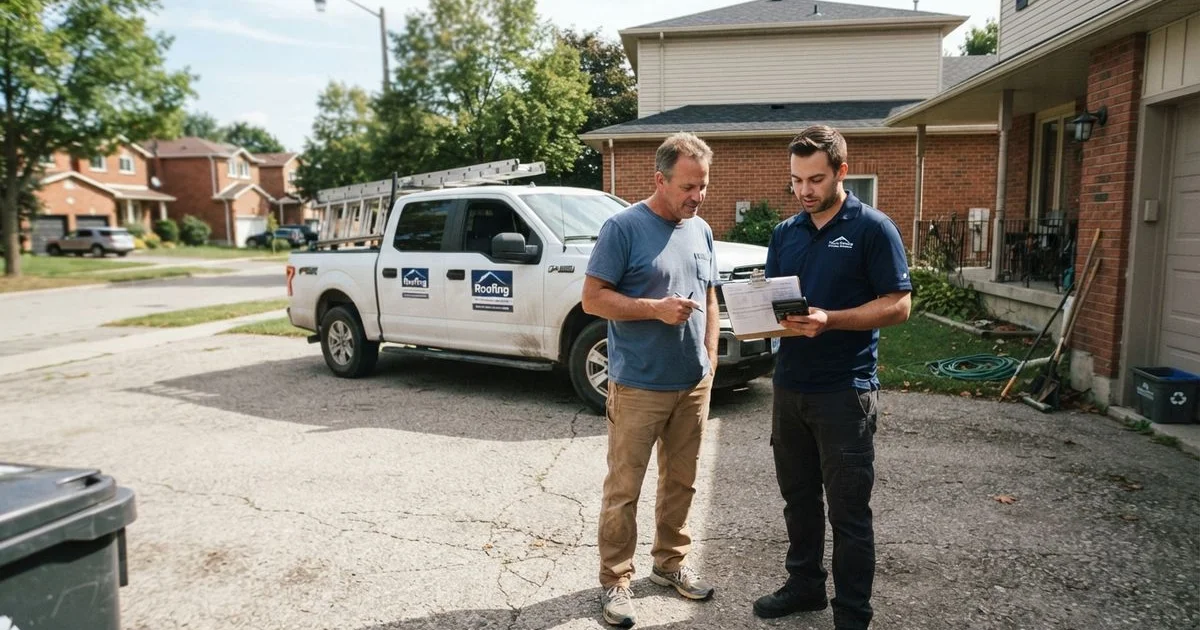
Roofing costs in Ontario swing widely depending on the project, the material, and what the crew finds once they start. This guide walks through typical ranges for the most common jobs and the factors that actually move the number on your quote, so you can sanity-check an estimate before you sign anything.
Repair costs
Most roof repairs fall into a lower range than homeowners expect, because a repair is priced by scope rather than by the whole roof surface. A small area of shingle damage or a single flashing repair sits at the low end. An active leak that needs the source traced and fixed, or storm damage across a wider area, costs more because of the diagnostic time and the amount of material replaced.
The biggest swing factor for repairs is access. A steep roof or a third-storey job takes longer and needs more safety equipment, which shows up in labour cost even when the damaged area itself is small. If you are still weighing whether your situation calls for a patch job or a full tear-off, our guide on roof repair or full replacement walks through that decision first.
Full replacement costs
A full roof replacement is priced mostly by material and roof size, with labour scaling alongside. Standard asphalt shingles remain the most common and most affordable option for Ontario homes. Metal roofing costs noticeably more up front but tends to outlast shingles by a wide margin, which changes the cost-per-year comparison. Flat or membrane roofing on additions and garages is priced differently again, based on membrane type and square footage rather than a per-square shingle rate.
Tear-off of the old roof adds to the total, since disposal and extra labour are involved. Skipping tear-off (installing over an existing layer) is sometimes allowed under Ontario building code up to a maximum of two layers, but it can mask decking problems and may not be worth the short-term saving.

Eavestrough and gutter costs
Eavestrough replacement is priced by linear footage rather than roof area, so a smaller bungalow can cost less than a large two-storey home even with a similar roof size. Material choice matters here too: standard aluminum is the most common and cost-effective option, steel costs more but resists denting, and copper sits well above both. Adding leaf guards increases the total but can reduce how often the gutters need cleaning.
What changes a quote up or down
| Factor | Pushes cost up | Pushes cost down |
|---|---|---|
| Roof pitch and storeys | Steep, tall, hard to access | Low slope, single storey |
| Material | Metal, slate, cedar shakes | Standard asphalt shingles |
| Tear-off | Full removal of old layers | Install over existing (where allowed) |
| Decking condition | Rot or damage found mid-job | Decking in good shape |
| Timing | Peak spring and fall season | Off-peak winter booking, where safe |
Getting a fair comparison
Ask each contractor for a written, itemized quote rather than a single lump number. A clear quote breaks out materials, labour, disposal, and any allowance for decking repair if rot is found once the old roof comes off. That last item matters: a quote with no decking allowance at all can mean a surprise change order partway through the job, which is one of the more common complaints homeowners raise about roofing projects.
If a quote comes in well outside the range you have gathered from other contractors, ask why before assuming it is a bargain or a rip-off. Sometimes it reflects a genuinely different scope, and sometimes it is a sign to get a fourth opinion.
Insulation and other add-on work
Some roofing projects present an opportunity to bundle in related work, most commonly attic insulation upgrades. Because insulation contractors and roofers sometimes coordinate on jobs where the roof deck is already open, pricing it alongside a replacement can be more efficient than a fully separate project later, though this depends on your specific home and the scope involved.
Seasonal timing and cost
Spring and fall are the busiest seasons for roofing work in Ontario, since weather conditions are generally favourable and homeowners tend to book after noticing winter damage or ahead of the next one. Booking in the off-season, where weather safely allows, can sometimes mean more flexible scheduling and, occasionally, more competitive pricing, since contractors have more capacity to take on work.
You can compare Ontario roofing contractors and see how they rank on our ranking method, which weighs pricing transparency alongside workmanship and communication. Start browsing the full Ontario Roofing Directory to line up a few quotes before committing to a project.
Frequently asked questions
- Why do two roofers quote such different prices for the same job?
- Differences usually come from material grade, crew size and speed, whether the price includes full tear-off and disposal, and how much warranty coverage is built in. Ask each contractor to break down labour, materials, and disposal separately so you can compare like for like.
- Does roof size alone determine the price?
- No. Pitch, number of storeys, roof access, the number of layers being removed, and the complexity of valleys and penetrations all affect labour time as much as square footage does.
- Is the lowest quote usually the best deal?
- Not necessarily. A quote well below others in the same range can mean thinner materials, an inexperienced crew, or missing line items like proper ventilation or flashing replacement that show up as extra charges later.
- Should I get more than one quote?
- Yes. Three quotes for a repair and at least three for a replacement gives you a realistic sense of the going rate in your area and makes outliers easier to spot.