Roof repair or full replacement: how to decide
By Marcus Ramos · Updated 2026-07-20
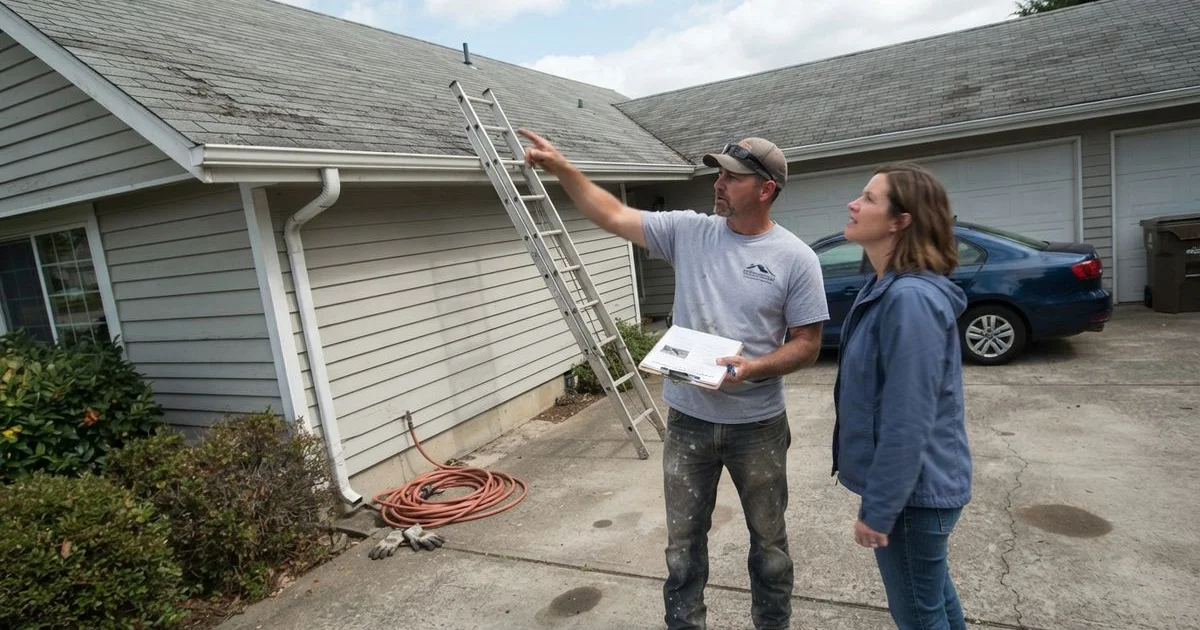
Most Ontario homeowners do not wake up planning to replace a roof. They notice a stain on the ceiling, a missing shingle after a windstorm, or a contractor’s inspection report, and then have to decide fast whether they are looking at a repair bill or a full project. The right call depends less on how the damage looks and more on the roof’s age, how widespread the problem is, and what is happening underneath the shingles. Our Ontario roofing directory exists to help you find a contractor who will give you a straight answer either way.
Start with the roof’s age
Asphalt shingle roofs in Ontario typically last 15 to 25 years, depending on the product and how much sun and freeze-thaw cycling the roof has taken. A roof under 10 years old with an isolated problem is almost always a repair candidate. Past the 20-year mark, the shingles have likely lost enough flexibility and granule protection that a repair in one spot signals wear everywhere else, even where it is not visibly leaking yet.
If you do not know the roof’s age, check the paperwork from when you bought the home, or ask a contractor to estimate it from the shingle style and wear pattern during an inspection.
Look at how much of the roof is affected
A repair fixes a problem. A replacement resets the whole surface. The math tends to tip toward replacement when:
- More than one section of the roof shows damage or wear.
- The decking underneath is soft, stained, or delaminating in more than one spot.
- Flashing around chimneys, vents, or valleys has failed in multiple places.
- You have already paid for two or more repairs on the same roof within a few years.
A single missing shingle, a cracked pipe boot, or one damaged valley after a storm is usually a contained job, even on an older roof, as long as the rest of the surface is sound.
What a contractor actually checks
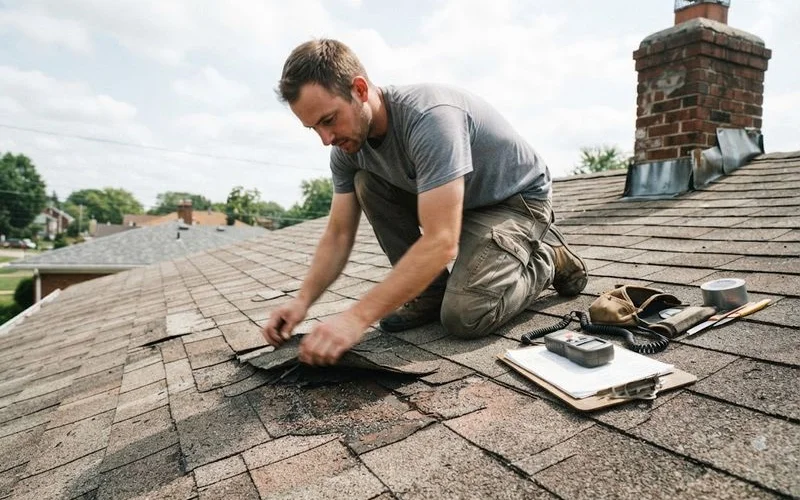
A useful inspection goes past what is visible from the driveway. A contractor walking the roof should check the decking for soft spots, look at how many layers of shingles are already on the roof (Ontario building code allows a maximum of two), assess flashing condition around penetrations, and estimate remaining shingle life from granule loss and curling. Ask for photos of anything they flag, especially decking issues, since that is the part you cannot see from the ground.
Comparing the two paths
| Factor | Repair makes sense | Replacement makes sense |
|---|---|---|
| Roof age | Under 12-15 years | Past 18-20 years, or unknown and worn |
| Damage extent | One localized area | Multiple areas or recurring leaks |
| Decking condition | Solid, no soft spots | Soft, stained, or rotted in places |
| Repair history | First repair in years | Second or third repair in a short span |
| Plans to sell soon | Repair, then disclose | Consider replacement for buyer confidence |
The cost-over-time question
A repair is cheaper up front, but if the roof needs another repair in two years and a full replacement in five, the repairs did not save money, they deferred it. Ask your contractor for a rough estimate of both paths, including material and labour, so you can compare total cost against how many years of life you are buying. For typical price ranges by project type, see our guide to what roofing projects cost in Ontario.
If your roof is under warranty, check the terms before committing to either path. Manufacturer warranties on materials and workmanship warranties from the installer are usually separate documents, and a repair done by a different contractor can sometimes void the original workmanship coverage.
When to just get the inspection
If you are unsure which category your situation falls into, the safest move is booking an inspection rather than guessing from a listing in our roof repair category, where you can compare contractors who handle both repair and full replacement work. A short visit typically costs far less than either the wrong repair or an unnecessary early replacement, and it gives you a written basis for comparing quotes. For how we evaluate and rank the contractors in our directory, see our ranking method.
Whichever way the decision goes, get the recommendation in writing along with photos of the damage. That documentation protects you if a second contractor gives a different opinion, and it becomes useful if you ever need to support an insurance claim or explain the work to a future buyer.
Frequently asked questions
- How do I know if a roof leak is a repair or a replacement problem?
- A single, localized leak on a roof under 15 years old is usually a repair. Multiple leak points, widespread granule loss, or soft spots in the decking point toward replacement, since patching several areas rarely costs less than redoing the whole surface.
- Is it ever worth replacing a roof early?
- Sometimes. If you are already paying for a major repair and the roof is past two-thirds of its expected lifespan, rolling that cost into a full replacement can be more efficient than paying for repairs twice in a few years.
- Can a roofing contractor tell me over the phone whether I need a repair or replacement?
- Not reliably. A phone estimate can rule out an emergency, but a firm recommendation needs someone on the roof looking at the decking, flashing, and shingle condition in person.
- Does a partial replacement make sense?
- Only in specific cases, such as one slope taking storm damage while the rest of the roof is younger and in good shape. Mixed-age roofs can complicate future insurance claims, so ask a contractor to walk you through the tradeoff before choosing it.