Signs your flat or commercial roof needs repair before it fails
By Marcus Ramos · Updated 2026-07-31
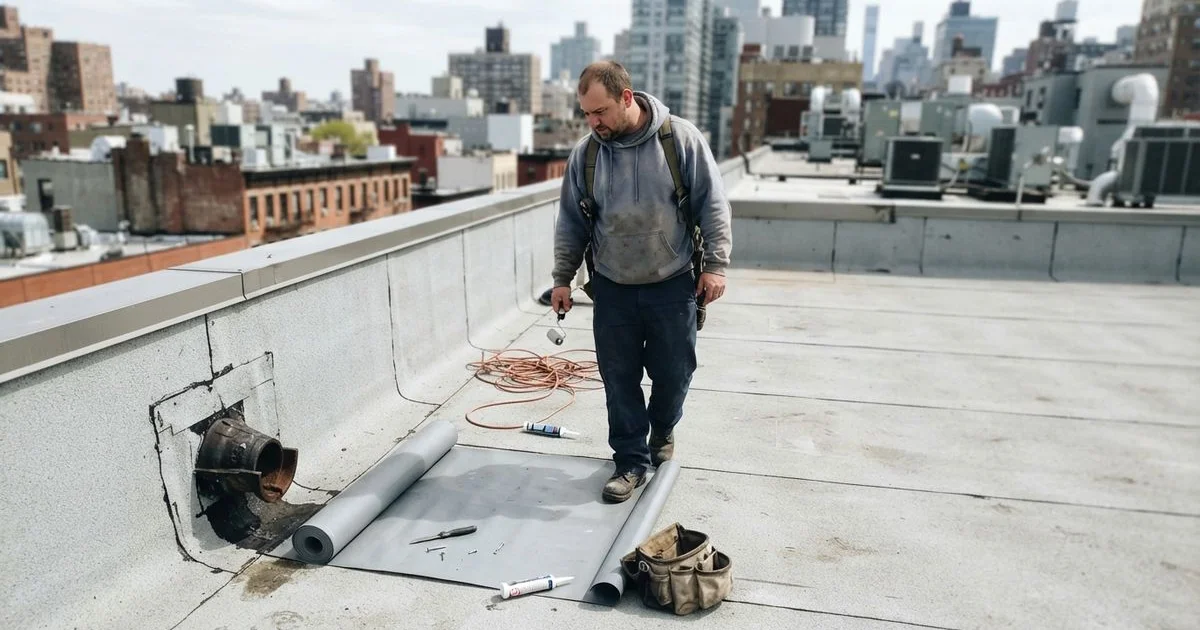
Flat and low-slope roofs, common on additions, garages, and commercial buildings across Ontario, fail differently than a typical shingled roof. Because there is little to no pitch, water and debris both tend to sit rather than run off, which means small problems can develop quietly before they show up as an obvious leak.
Standing water that does not drain
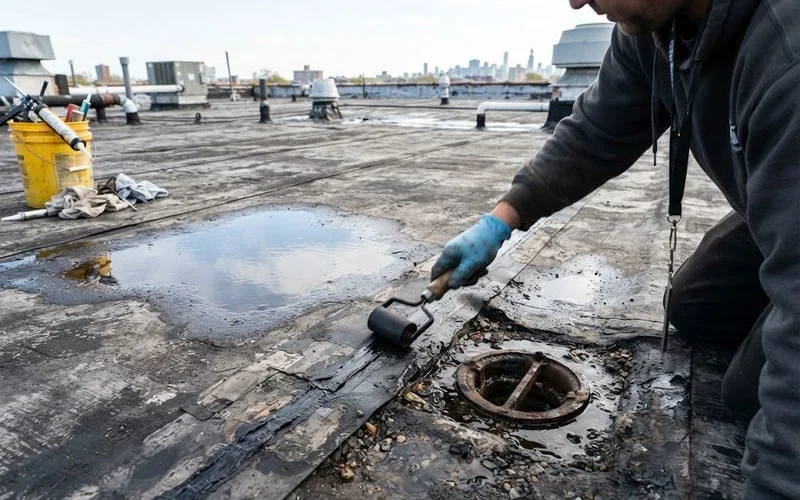
A well-functioning flat roof should shed most water within a day or two after rain. Puddles that remain for several days after the weather clears, especially in the same spot every time, point to a drainage problem, whether that is a low area in the membrane, a clogged drain, or a slope issue from the original installation. Standing water adds weight and speeds up wear at the ponding area.
Membrane damage: bubbles, blisters, and cracks
Bubbling or blistering in the membrane surface usually means moisture has gotten trapped underneath, often from a small breach that let water in during a previous rain. Cracking, especially around seams or where the membrane meets a wall or vent, is a common entry point for water even before a visible leak appears inside the building.
Interior warning signs
Not every flat roof problem shows up outside first. Watch for ceiling staining, a musty smell in a top-floor room, bubbling paint or drywall, or a noticeable rise in humidity in the space directly below the roof. Because water can travel along the underside of a membrane before dripping down, the stain inside is not always directly under the actual breach, which is part of why a professional trace is often needed to find the real source.
Drains, scuppers, and flashing
Blocked or damaged drains and scuppers are one of the most preventable causes of flat roof problems. Debris, leaves, and granules can collect over a season and slow drainage enough to cause pooling even on a well-installed roof. Flashing around the roof perimeter and any rooftop equipment, like HVAC units or vents, is another common failure point, since it takes the most movement from temperature swings.
A quick reference
| Sign | What it usually means |
|---|---|
| Water pooling for 48+ hours in the same spot | Drainage or slope issue |
| Bubbling or blistering membrane | Trapped moisture under the surface |
| Cracking at seams or edges | Membrane wear, possible entry point |
| Interior ceiling stains or musty smell | Active or past leak, source not always visible |
| Visible debris blocking a drain | Preventable drainage failure |
What to do if you spot these signs
A membrane roof issue caught early is often a targeted repair: resealing a seam, clearing a drain, or patching a localized area. Left unaddressed, the same issue can mean replacing a larger section of membrane or dealing with interior damage that costs far more than the original repair would have. If a membrane failure turns into an active leak, our guide on emergency roof repair covers what to do first while you wait for a crew. If you manage a commercial property, building a twice-yearly inspection into your maintenance routine catches most of these signs before they become emergencies.
Snow load on flat roofs
Ontario winters add a specific concern for flat and low-slope roofs: snow does not shed the way it does on a pitched roof, so it can accumulate and add significant weight over the course of a winter. After a heavy snowfall, a visible buildup that does not appear to be melting or settling over several days is worth having assessed, particularly on an older commercial roof or one already showing membrane wear.
Rooftop equipment and penetrations
Flat roofs on commercial buildings often carry HVAC units, vents, and other equipment directly on the roof surface, and each one is a penetration point where the membrane can be vulnerable. Ask a contractor to specifically check the seals and flashing around any rooftop equipment during an inspection, since these areas take more movement and stress than open sections of membrane and tend to fail before the rest of the roof does.
You can find contractors experienced with flat and low-slope roofing in our flat and commercial roofing category, evaluated using our ranking method. Visit the Ontario Roofing Directory to compare providers before booking an inspection.
Frequently asked questions
- How often should a flat roof be inspected?
- Twice a year is standard, in spring and fall, plus a check after any major storm. Flat roofs pool water and shed snow differently than sloped roofs, so seasonal transitions are when problems tend to surface.
- Why does standing water matter on a flat roof?
- Membrane roofing is designed to handle brief pooling after rain, but water that sits for more than 48 hours adds weight and accelerates membrane wear at the ponding area, increasing the chance of a leak developing there over time.
- Can a small flat roof leak wait until spring?
- It depends on severity, but waiting generally makes the repair bigger. Water that gets under a membrane can travel sideways before it shows up as a ceiling stain, so the visible leak point is not always the actual source.
- Is a flat roof more maintenance than a sloped roof?
- Generally yes. Flat and low-slope roofs rely more heavily on the membrane and drainage system staying intact, since there is less pitch to shed water quickly on its own.