Replacing your roof and siding together in Ontario: what to know
By Marcus Ramos · Updated 2026-08-24
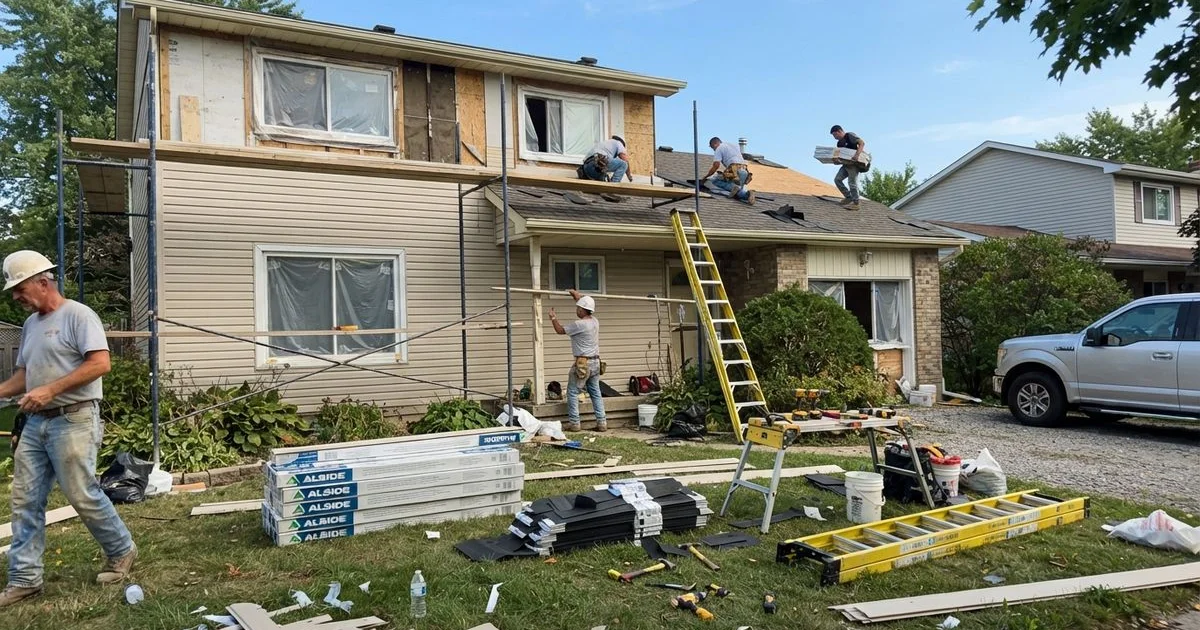
Roof and siding projects often get triggered by the same underlying reality: an aging exterior envelope that is due for renewal on multiple fronts at once. Bundling the two is common in Ontario, but it is worth understanding the tradeoffs and the right sequence before committing to doing both together.
Why homeowners bundle these projects
The most common reason is efficiency. Scaffolding, site setup, permits, and disposal logistics can sometimes be shared between the two projects rather than arranged twice, which can reduce total cost compared to doing them as fully separate jobs months apart. There is also a disruption argument: one period of noise, crews on site, and a work zone around the property, rather than living through the same disruption twice.
A shared timeline can matter too. If both the roof and the siding are original to a home reaching 20 or more years old, they are often wearing out around the same time, which makes bundling a practical response to two problems arriving together rather than a special deal. If storm damage is what pushed both toward replacement at once, our guide on emergency roof repair covers the immediate steps before the bigger project begins.
Getting the sequence right
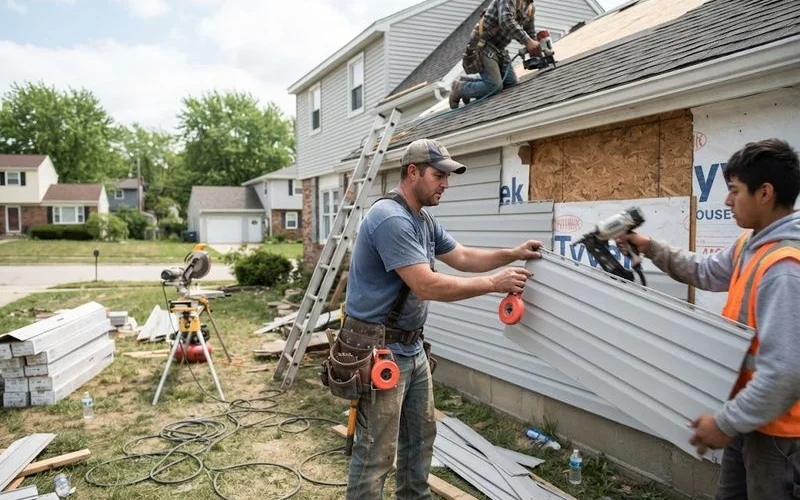
The roof typically goes first. Roofers often need to adjust or replace flashing, drip edge, and trim where the roofline meets the exterior wall, and doing this work before new siding goes up avoids the risk of damaging a freshly installed siding job during roof work. Starting with siding first can mean redoing trim work at the wall-roof junction once the roof crew comes through, which adds cost rather than saving it.
One contractor or two
Some companies handle both roofing and siding directly, while others focus on one trade and subcontract or refer out the other. Either arrangement can work well, but it is worth asking directly who manages the sequencing between the two, and who is responsible if an issue arises at the point where the new roof meets the new siding, such as a flashing detail that was not properly coordinated between the two crews.
Weighing the decision
| Factor | Bundling together | Doing them separately |
|---|---|---|
| Shared overhead costs (scaffolding, permits) | Often reduced | Paid twice |
| Disruption to the household | One longer period | Two shorter periods, spaced apart |
| Coordination risk at roof-wall junction | Lower if one contractor manages both | Higher if timed independently |
| Total project cost | Higher overall, lower per-project | Spread out, easier to budget in stages |
| Urgency if only one truly needs replacing | Can mean spending on the less urgent one early | Matches spending to actual need |
When it makes less sense to bundle
If only one of the two genuinely needs replacement soon and the other has meaningful life left, bundling can mean spending money earlier than necessary on the healthier component. Get an honest assessment of both separately before assuming they need to happen together just because it is convenient to do so at the same time.
Budgeting for a combined project
A combined roof and siding project is a significant expense, and it is worth financing or budgeting for it as one larger project rather than two smaller ones you might otherwise spread further apart. If cash flow is a concern, ask contractors whether the work can be phased over two seasons while still coordinating the design and colour choices upfront, so the final result looks intentional rather than mismatched.
Coordinating colour and material choices
Doing both projects together gives you a chance to plan the exterior as a whole rather than matching new work to an existing, aging component. Bring samples of both roofing and siding materials together when making decisions, since colours and textures that look fine individually do not always complement each other once installed side by side on the same house.
Getting quotes for a combined project
Ask contractors for an itemized quote that separates roofing and siding costs clearly, even if you are bundling the work, so you can see what you are actually paying for each component and compare that against doing them separately with different providers.
You can browse siding specialists in our siding contractor category, evaluated using our ranking method. Visit the Ontario Roofing Directory homepage to compare roofing categories as well.
Frequently asked questions
- Is it cheaper to do a roof and siding project at the same time?
- Often, yes, since some overhead costs like scaffolding, permits, and site setup can be shared between the two projects rather than paid twice, though the total project cost is still higher than doing either alone.
- Which should be done first, the roof or the siding?
- The roof generally goes first. Roofers sometimes need to adjust flashing and trim where the roofline meets the wall, and doing the roof first avoids damaging brand-new siding during that work.
- Can one contractor handle both, or do I need two separate companies?
- Some contractors handle both trades directly, while others subcontract one of them. Either can work, but confirm upfront who is responsible for coordinating the sequence and who is liable if something goes wrong at the interface between the two.
- Does bundling the projects mean one longer disruption instead of two?
- Generally yes, which is one of the main appeals: one period of noise, scaffolding, and site disruption rather than two separate projects spaced months or years apart.